
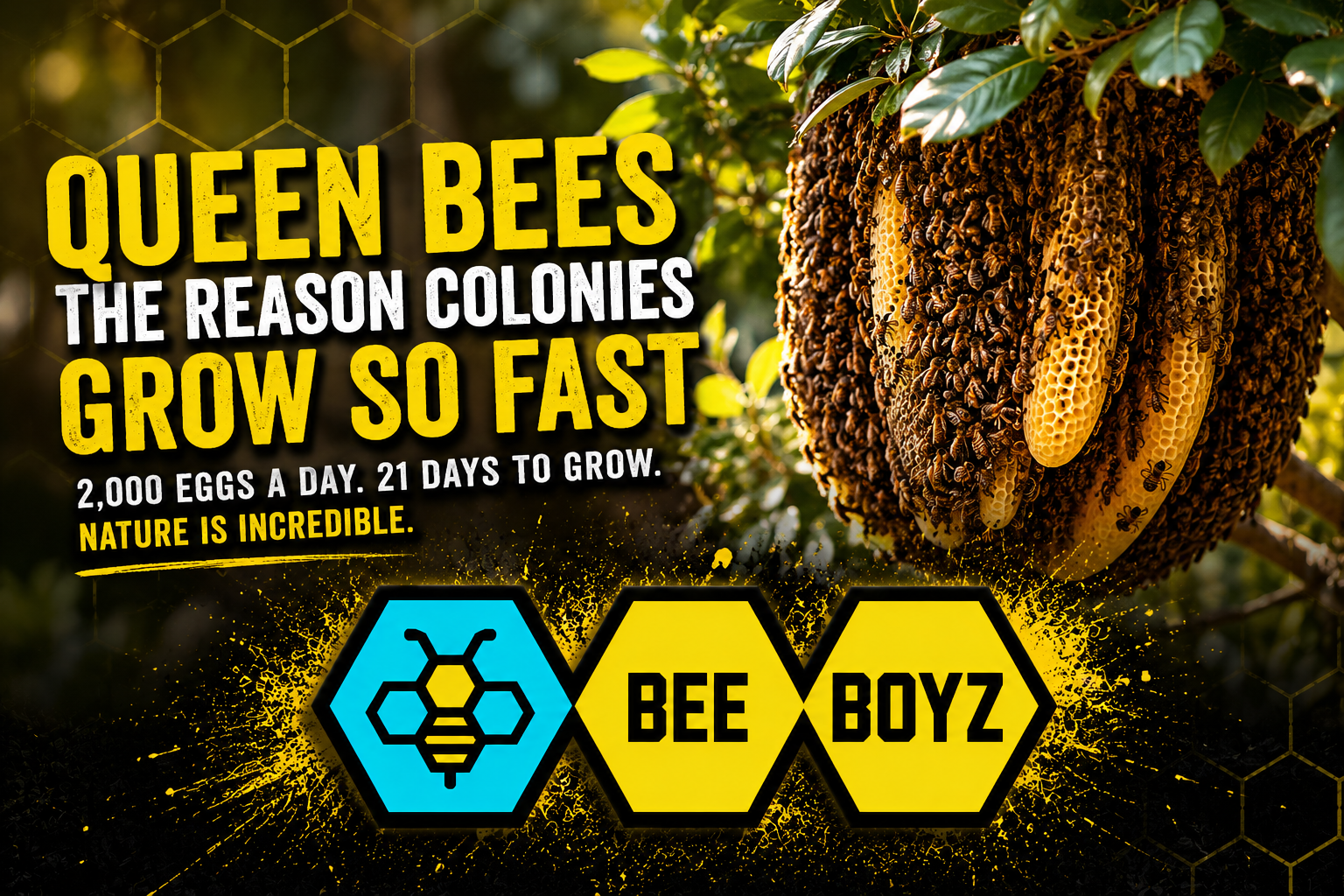

Queen Bees Are Nature’s Powerhouses
Most people see a swarm of bees and think one thing:
“How did they get so big so fast?”
The answer is surprisingly simple.
During South Florida’s warm spring and summer months, a healthy queen honey bee can lay up to 2,000 eggs every single day. Those eggs develop from egg to adult worker bee in approximately 21 days.
Think about that.
Every day, the queen is replacing an entire small colony’s worth of bees.
That’s why a hive that seems small today can become tens of thousands of bees in just a matter of weeks.
For homeowners throughout Fort Lauderdale, Plantation, Davie, Hollywood, Pembroke Pines, Cooper City, Weston, Sunrise, Miami, Coral Springs, Boca Raton, Delray Beach, Boynton Beach, West Palm Beach, and all of South Florida, this rapid growth explains why it’s important not to ignore bee activity around your home.
Understanding the Queen Bee
The queen is the only fertile female in a healthy colony.
Her primary responsibility isn’t collecting nectar or making honey.
Her job is to build the colony.
When nectar and pollen are plentiful, the queen lays eggs almost continuously.
Because South Florida enjoys a subtropical climate, bees often have a much longer breeding season than colonies in northern states.
That means colonies here can expand rapidly nearly year-round, especially during spring and summer.
Why Colonies Grow So Quickly in Florida
South Florida offers nearly perfect conditions for honey bees.
Colonies benefit from:
- Warm temperatures
- Flowering plants throughout the year
- Citrus blossoms
- Palm trees
- Tropical landscaping
- Native wildflowers
- Plenty of water sources
Unlike colder climates where colonies slow down in winter, Florida bees often continue raising brood for much of the year.
This is one reason bee removal calls increase dramatically across Miami-Dade, Broward, and Palm Beach Counties.
The 21-Day Life Cycle
Every worker bee begins as an egg.
Here’s how quickly development happens:
- Days 1-3: Egg
- Days 4-9: Larva
- Days 10-20: Pupa
- Day 21: Adult worker bee emerges
Imagine the math.
If a queen lays around 2,000 eggs every day during peak season, approximately three weeks later those workers begin joining the colony.
The population can increase at an astonishing rate.
Why Swarms Happen
As colonies become crowded, the bees naturally prepare to reproduce.
The old queen leaves with thousands of worker bees to find a new home.
This is called swarming.
Unfortunately, many swarms choose places like:
- Roofs
- Attics
- Soffits
- Block walls
- Palm trees
- Water meter boxes
- Sheds
- Outdoor grills
If left alone, what starts as a small swarm can quickly become a large established hive.
Why You Should Never Spray or Kill a Swarm
Many homeowners panic when they see thousands of bees.
However, swarming bees are often at one of their gentlest stages because they have no hive to defend.
Spraying pesticides often creates bigger problems:
- Bees die inside walls.
- Honey attracts ants, roaches, rodents, and other pests.
- Wax melts in South Florida heat.
- Honey can leak through drywall and ceilings.
- The remaining scent often attracts another swarm later.
Professional live bee removal and relocation protects both your property and Florida’s vital pollinator population.
Why Honey Bees Matter
Honey bees are responsible for pollinating many of the fruits and vegetables we enjoy every day.
Without healthy bee populations, agriculture would suffer dramatically.
Florida’s bees help pollinate:
- Avocados
- Mangoes
- Citrus
- Watermelons
- Cucumbers
- Blueberries
- Squash
- Tomatoes
- Hundreds of native flowering plants
Every colony safely relocated helps support Florida’s ecosystem and local agriculture.
BeeBoyz: Live Bee Removal Throughout South Florida
At BeeBoyz, we believe every healthy colony deserves a chance to survive.
Whenever possible, we perform live bee removal and relocation instead of extermination.
Our experienced team safely removes colonies from homes, commercial buildings, trees, and difficult locations while protecting your family and preserving these essential pollinators.
We proudly serve:
- Fort Lauderdale
- Davie
- Plantation
- Pembroke Pines
- Cooper City
- Hollywood
- Weston
- Sunrise
- Coral Springs
- Miami
- Miami Beach
- Kendall
- Boca Raton
- Delray Beach
- Boynton Beach
- West Palm Beach
- And communities throughout Broward, Miami-Dade, and Palm Beach Counties
Don’t Wait Until the Colony Doubles
Remember:
Today’s small swarm could become tens of thousands of bees in just a few weeks.
If you’ve noticed bees entering a wall, roof, tree, or other structure, early intervention is safer, less expensive, and far easier than waiting for the colony to mature.
Contact BeeBoyz for professional live bee removal, bee rescue, and colony relocation anywhere in South Florida.