


If you’ve stepped outside in South Florida during spring or summer and suddenly found a massive cloud or cluster of bees on your fence, tree, or roof, you’re not alone. Bee swarms are one of the most common and misunderstood natural events in our region, and knowing what to do (and what not to do) can make all the difference.
At BeeBoyz Contractors Inc., we specialize in live bee removal throughout South Florida. We don’t kill the bees we relocate them safely and humanely. Every season, we respond to hundreds of calls from homeowners and businesses who aren’t sure whether they have a bee emergency on their hands or simply a temporary visitor. This guide will help you tell the difference.
What Is a Bee Swarm?
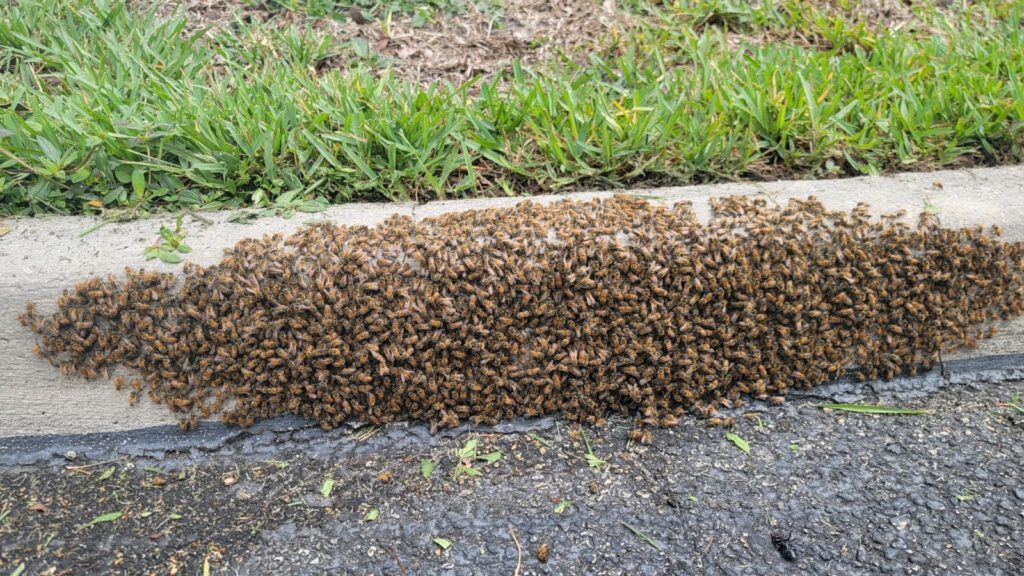
A bee swarm is a natural part of honeybee reproduction. When a hive grows too large, the old queen leaves with roughly half the colony to find a new home. This massive group of bees — sometimes tens of thousands strong — takes to the air in what looks like a buzzing, swirling cloud before settling together in a tight cluster to rest.
That cluster might land on a tree branch, a mailbox post, a car bumper, the side of your house, or even a playground swing set. To the untrained eye, it looks alarming. But here’s the key thing to understand: a swarm is not an established hive. It is a colony in transit, resting temporarily while scout bees search for a permanent nesting location.
Swarms are generally at their least aggressive during this phase. The bees have no hive, no honey, and no young to defend. That said, you should still keep your distance and never disturb them.
When Is Bee Swarm Season in South Florida?
South Florida’s warm, subtropical climate means we have one of the longest bee swarm seasons in the country. While swarms happen year-round here, the peak season runs from February through July, with March, April, and May being especially active months. Our mild winters allow colonies to grow large earlier than in northern states, and the abundance of flowering plants — from bougainvillea to citrus groves to palmetto — gives bees plenty to work with.
Africanized honeybees are also present in South Florida, which is one reason it’s especially important to contact a professional rather than attempt any removal yourself. While Africanized bees look identical to European honeybees, they are significantly more defensive of their colony.
“During the spring and summer season, we see a lot of swarms on their way to new nesting places, sometimes choosing surprising resting areas. Our recommendation to our customers is to wait 45 minutes to a day before we can consider you have a bee situation. Worker honeybees prepare for swarming many days in advance of the event. And what a tremendous event it is.”
— Jorge Valencia · Bee Boyz Contractors Inc.
How Long Will a Swarm Stay?
This is the question we get most often. The honest answer: it depends. Most swarms are temporary and will move on within a few hours to a couple of days once scout bees locate a suitable new home. This is exactly why Jorge recommends waiting 45 minutes to a full day before calling it a true bee situation.
However, if a swarm begins to move into a void in your structure — a wall cavity, a soffit, an attic, or a tree hollow — they are no longer swarming. They are nesting. Once bees establish a nest and begin building comb, you absolutely need professional removal. The longer a colony is left in a wall or structure, the more extensive (and expensive) the remediation becomes.
How to Tell the Difference:
Swarm: Bees clustered on an exposed surface — a tree, fence, or eave. Activity may be loud but the bees are visibly grouped together and relatively still. Many swarms move on within hours.
Established Colony: Bees entering and exiting a hole, gap, or crack in a structure. Traffic is consistent throughout the day. This needs professional removal right away.
What to Do When You See a Bee Swarm
Step 1: Stay Calm and Keep Distance
A swarm cluster looks intimidating, but bees in transit mode are focused on survival, not stinging. Give the cluster a wide berth — at least 10 to 20 feet — and keep children and pets indoors. Do not swat at the bees, spray them with water, or attempt to smoke them out.
Step 2: Wait and Observe
Give the swarm at least 45 minutes to a full day. Many swarms simply move on. Watch from a safe distance and note whether the cluster is staying put or beginning to investigate gaps in your home’s structure.
Step 3: Call the Professionals If Needed
If the swarm remains for more than a day, if it has moved into a structure, or if you are seeing bees consistently entering and exiting a gap in your home — it’s time to call Bee Boyz. We offer live bee removal throughout South Florida. We capture the colony, safely relocate the bees, and where possible, remove and treat the comb to prevent future infestations.
Do:
- Keep a safe distance from the cluster
- Keep children and pets indoors
- Wait 45 minutes to 1 full day before deciding it’s a problem
- Observe from a safe location
- Call Bee Boyz if bees are entering a wall, soffit, or structure
- Note how long the swarm has been present when you call
Don’t:
- Spray the bees with water or pesticide
- Try to knock down or disturb the cluster
- Seal entry points yourself — bees trapped inside become far more dangerous
- Attempt DIY hive removal
- Run — stay calm and back away slowly
- Ignore bees that are actively entering a gap or crack in your home
Why Live Bee Removal Matters
Honeybees are in serious decline across the United States, and Florida is no exception. Pesticides, habitat loss, and disease have taken a heavy toll on wild and managed bee populations alike. Honeybees pollinate roughly one-third of the food we eat — from avocados and mangos to the citrus that defines South Florida agriculture.
At Bee Boyz, we believe killing bees should never be the first option. Our team is trained to capture and relocate live colonies, giving them a chance to thrive in a safe environment away from residential and commercial areas. When homeowners call us, they can feel confident that the bees won’t be exterminated — they’ll be given a second chance.
Killing a colony inside a wall without removing the comb also creates a different problem: the decomposing honey and wax attract other pests and can cause structural damage. Live removal, done right, addresses the root problem without creating new ones.
Common South Florida Swarm Locations
Over the years, our team has seen honeybee swarms and colonies in some truly unexpected spots. Common locations we service include:
- Soffits and roof eaves — one of the most frequent nesting spots in South Florida homes
- Exterior walls — bees enter through weep holes in block construction or gaps around utility penetrations
- Meter boxes and irrigation control boxes — dark, enclosed, and protected from rain
- Palm trees and hollow oaks — natural cavities are prime real estate for scout bees
- Pool equipment enclosures — warm, sheltered, and frequently overlooked
- Vehicles and trailers left stationary for extended period
Frequently Asked Questions
Are swarm bees dangerous?
A swarm cluster in transit is generally much less aggressive than an established colony. However, you should never provoke or disturb them. Africanized honeybees are present in South Florida and are significantly more defensive. Always maintain distance and call a professional if you’re unsure.
How much does live bee removal cost?
The cost varies depending on where the bees are located, how established the colony is, and what structural work may be involved. Contact Bee Boyz directly for a quote specific to your situation. We always aim to give honest, fair assessments.
Will the bees come back after removal?
If the comb is properly removed and the entry points are sealed, the likelihood of a returning colony is low. However, if comb residue or pheromones remain, new swarms can be attracted to the same location. This is why complete removal — bees and comb — is always recommended.
Can I just wait and hope they leave on their own?
For a visible swarm cluster on a tree or fence, yes — many do move on naturally within hours to a couple of days. For bees entering a structure, no. The sooner a nesting colony is removed, the easier and less expensive the process.
Call Bee Boyz — South Florida’s Live Bee Removal Specialists
Whether you’re watching a spectacular swarm cluster form on your backyard oak or you’ve noticed bees disappearing into your soffit every morning, Bee Boyz is here to help. We serve homeowners and businesses throughout South Florida with professional, humane, live bee removal. We take the bees — we don’t take their lives.
Don’t spray. Don’t seal. Don’t panic. Call Bee Boyz.